Investing in Solutions to Improve Student Attendance

Guided by a cross-sector committee, new grants will fuel promising efforts to keep students connected to school.
The Minneapolis Foundation is awarding more than $267,000 in grants to four metro-area school districts and schools that are doing innovative work to improve student attendance and reduce chronic absenteeism. Funding will support Bloomington Public Schools, Fridley Public Schools, Hiawatha Academies, and North St. Paul-Maplewood-Oakdale Public Schools.
The grants were recommended by a committee of education leaders, policymakers, and practitioners convened by the Minneapolis Foundation this year. Their work builds on the Foundation’s ongoing efforts to advance policies that support consistent attendance in K-12 schools across Minnesota.
“Every day a student misses school is a day they’re missing opportunities to learn, connect and feel part of their school community,” said Patrice Relerford, the Foundation’s Vice President of Collective Impact and Giving. “We’re proud to support state and local leaders as they work across systems to ensure that no student falls through the cracks.”
Chronic absenteeism is generally defined as missing 10% or more of the school year—about 16 days. It has become a significant challenge for schools in Minnesota and across the country, particularly since the Covid-19 pandemic and, more recently, the surge in immigration enforcement.
Minnesota policymakers have been working to understand and address the issue. In 2024, the Legislature invested more than $4 million to support 12 school districts in testing strategies to reduce chronic absenteeism. The Legislature also created a bipartisan Student Attendance Legislative Study Group to examine policy and other barriers to regular school attendance.






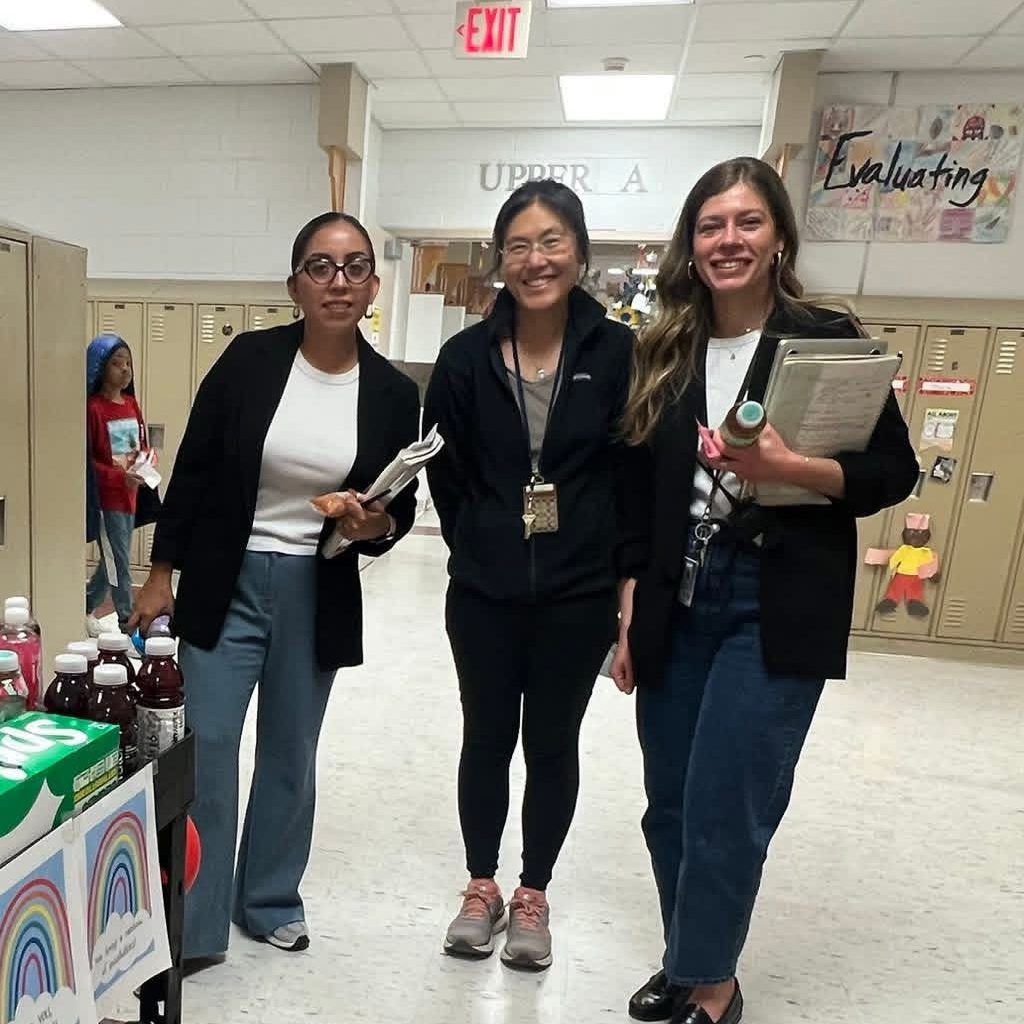
Photos courtesy of Bloomington Public Schools and North St. Paul-Maplewood-Oakdale Public Schools
Over the past two years, the Foundation has engaged in advocacy to support this work, bringing stakeholders together to share research and strengthen coordination among the many local and state agencies involved in tracking and supporting students when they miss school.
“Many of our students struggle to engage in our education system and our schools are trying their best to find solutions, but they need a little more support,” said Rep. Cheryl Youakim, one of a dozen leaders who served on the advisory committee. “A huge thank you to the Minneapolis Foundation for partnering with our public schools by providing grants that will help our schools to find and break down those barriers our students face in getting to and staying in school.”
Here’s a complete list of the grants:
- Bloomington Public Schools: $53,000 to implement NextPath, a districtwide platform for data visualization and student support that will assist with data analysis and build a stronger Multi-Tiered System of Support to improve communication amongst staff and attendance interventions. “This grant empowers our staff with real-time data to proactively address chronic absenteeism and deliver targeted support,” said Bloomington Superintendent Eric Melbye. “It strengthens our MTSS framework across our schools, ensuring we can break down systemic barriers and keep every Bloomington student connected, supported, and ready to learn.”
- Fridley Public Schools: $64,140 to purchase and implement Talking Points, software that allows the school district to communicate with families and build a dashboard to track attendance outcomes. The district will use this software to build a tiered system of support for students and families so it can more effectively identify and address early warning signs of chronic absenteeism.
- Hiawatha Academies: $75,000 to establish an evidence-based reengagement pilot program for 150 high-risk students in grades 6-9 that will include case management, community reengagement hubs, transportation support, structured academic reentry, and individualized reentry plans.
- North St. Paul-Maplewood-Oakdale Public Schools: $75,000 to provide professional development and ongoing coaching to educators in select schools, shifting their practice to ensure students are more engaged and feel a sense of belonging in their schools. “This grant will allow us to test a scalable model that shifts attendance from a reactive system to a proactive, community-driven effort grounded in effective instruction, strong relationships, and shared responsibility,” said Andrew Beaton, the school district’s Assistant Superintendent for Secondary Schools.
These grants are the result of a collaborative process that included representatives from the Minnesota House of Representatives, Minnesota Department of Education, Hennepin County, Minneapolis Public Schools, Columbia Heights Public Schools, Burnsville-Eagan-Savage School District 191, and EdAllies. The advisory committee invited 12 metro-area school districts and charter schools to apply and selected the four grant partners through a process that included application scoring, group discussion, and ranked-choice voting.
“Evaluating these grants alongside education leaders and experts deepened my understanding of the complex challenges surrounding student attendance, especially as I listened to the many perspectives in the room,” said Rep. Julie Greene, another member of the advisory committee. “As a legislator, learning from the expertise of others is invaluable as we work together to find better and effective solutions for students across the state.”
The Minneapolis Foundation is grateful to the members of the advisory committee, including:
- Suzanne Arntson, Deputy Health and Human Services Director, Scott County
- Gregg Campbell, COMPASS Attendance Specialist, Minnesota Department of Education
- Heather Giese, COMPASS School Improvement Supervisor, Minnesota Department of Education
- Rep. Julie Greene, House Education Finance and Policy Committee Member, Minnesota House of Representatives (50A)
- Ashley Hightower, Community Engagement and Strategy Manager, Be at School – Hennepin County Attorney’s Office
- Colleen Kaibel, Student Retention and Recovery Director, Minneapolis Public Schools
- Morgan McDowell, Multi-Tiered Systems of Support Teacher on Special Assignment, Burnsville-Eagan-Savage School District 191
- Rep. Patricia Mueller, House Education Policy Committee Co-Vice Chair, Minnesota House of Representatives (23B)
- Bondo Nyembwe, Assistant Superintendent, Columbia Heights Public Schools (current – Richfield Public Schools)
- Matt Shaver, Senior Policy Director, EdAllies
- Rep. Cheryl Youakim, House Education Finance Committee Co-Chair, Minnesota House of Representatives (46B)